Six Seconds and Done: The Digital Artists Who Believe Less Time Means More Meaning
There's a specific kind of frustration that comes from watching a six-second animation loop and realizing, somewhere around the fourth or fifth repeat, that you still haven't fully understood it. That feeling — equal parts intrigue and mild unsettlement — is exactly what a new generation of digital artists is deliberately engineering into their work.
Call them the minimalists of duration. Where most creators are racing to fill every available second with stimulation, these artists are doing the opposite: trimming their pieces down to the bone, building works that conclude before you've had a chance to settle in, and trusting that brevity, wielded with intention, can carry more emotional weight than an hour-long deep dive ever could.
The Anti-Algorithm Statement
To understand why this movement is gaining traction, it helps to understand what it's pushing back against. The modern content economy rewards duration. Watch time, session length, average minutes consumed — these are the metrics platforms use to determine what rises and what disappears. Creators who want visibility are quietly incentivized to stretch, pad, and extend their work far beyond its natural endpoint.
The result is a digital landscape where everything feels slightly too long. YouTube tutorials that could be two minutes run twelve. Explainer threads that could be a single image become sprawling carousels. Even digital art, a medium with no inherent runtime requirement, often gets packaged into extended showcase reels, ambient loops designed to keep eyes on screen as long as possible.
The artists working in ultra-short form are essentially filing a formal objection. A six-second animation doesn't game any algorithm. A one-click interactive installation doesn't pad a watch-time metric. These pieces exist entirely outside the logic of content optimization, and that's precisely the point.
What Six Seconds Can Actually Do
The creative constraints of extreme brevity are genuinely demanding. When you have six seconds — or one click, or a single visual beat — every element has to earn its place. There's no room for setup that doesn't pay off, no space for visual filler, no tolerance for anything that isn't doing real work.
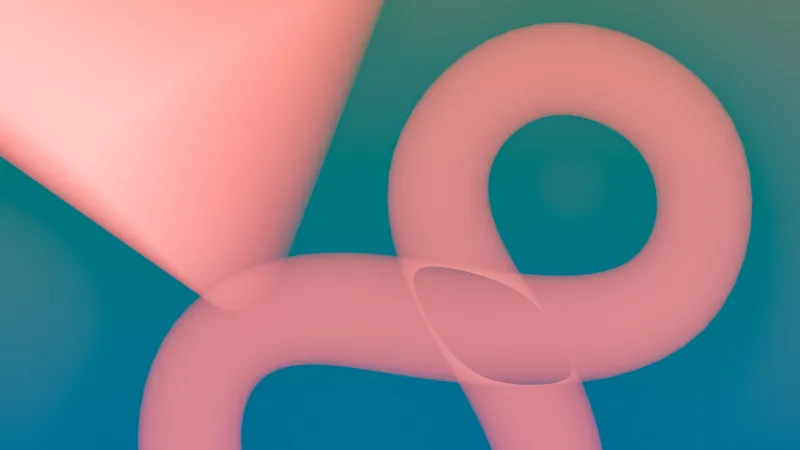
Some creators working in this space lean into pure abstraction: a color field that shifts once, a geometric shape that completes a single transformation, a sound-paired visual that exists for the length of one exhale. Others build in deliberate incompleteness — experiences that technically end but feel unresolved, prompting the viewer to return and re-examine.
That second approach is particularly interesting. When an artwork refuses to give you a satisfying conclusion, you naturally start generating your own. You fill the gap. You project meaning onto the absence. The artist provides maybe thirty percent of the experience; the viewer's imagination quietly supplies the rest. It's a fundamentally different relationship than passive consumption, and for audiences who've grown exhausted by content that explains itself to death, it's a refreshing change of pace.
Repeat Viewing as the Whole Point
One of the stranger aspects of this format is how it handles replay. A six-second piece that you watch once is almost nothing. Watch it three times and something starts to emerge. Watch it ten times and you begin to notice things — a color shift at the two-second mark, a barely perceptible texture change, a compositional choice that only reveals itself once you stop trying to absorb the whole thing at once.
This is intentional. Several artists working in this space have talked openly about designing for the third or fourth viewing, not the first. The initial watch is almost like a handshake — a brief introduction that doesn't really tell you anything. The meaning accumulates across returns.
That's a fundamentally different ask than most digital content makes of its audience. It requires patience, a willingness to sit with something that doesn't immediately deliver, and a tolerance for not quite understanding. These aren't qualities that the broader content economy has done much to cultivate. Which makes the audiences who genuinely seek out this kind of work feel, to the artists making it, like a particularly engaged and intentional community.
The Platforms (and the Lack Thereof)
Finding and distributing ultra-short digital art is its own interesting challenge. The major platforms aren't built for it. A six-second video on YouTube gets buried under autoplay recommendations before the viewer has time to process what they just saw. Social media feeds move too fast. Even dedicated art platforms tend to favor longer, more elaborate works that photograph well in preview thumbnails.
A lot of creators in this space are distributing work through personal sites, small curated newsletters, and niche digital galleries that operate more like traditional art world venues — limited runs, intentional curation, an expectation that the viewer is showing up with some degree of purpose. There's something almost analog about the distribution model, which sits in interesting tension with the digital nature of the work itself.
Some are experimenting with formats that make the brevity even more explicit — releasing pieces with no replay button, or versions that can only be viewed once before expiring. It's a dramatic choice, but it reinforces the central argument: this is not content to be consumed. It's an experience to be had, once, with full attention.
Why Audiences Are Actually Paying Attention
There's a real appetite for this, and it's worth taking seriously rather than treating it as a niche quirk. After years of content overload — more hours of video uploaded every minute than any human could watch in a lifetime, more articles published daily than anyone could read in a year — a growing slice of the audience is actively seeking out experiences that don't demand much of their time but do demand something of their attention.
The distinction matters. Time and attention are not the same resource. A twelve-minute video can pass without leaving much of an impression. A six-second piece, watched with genuine focus and revisited three times, can stick with you for days. The artists making this work understand that equation intuitively, even if the platforms and metrics haven't caught up.
There's also something genuinely countercultural about it in the current moment. Choosing to make something short, something that doesn't optimize for reach, something that asks the viewer to do a little work — that's not the path of least resistance in today's creative economy. It's a deliberate choice, and audiences who find this work tend to recognize and respond to that intentionality.
The Quiet Argument
What these artists are ultimately making is a quiet but pointed argument about value. Not every worthwhile experience needs to be long. Not every meaningful piece of art needs to explain itself. Not every creative work needs to be designed around the preferences of an algorithm.
Six seconds, one click, a single held breath — it turns out that's enough room to say something real, if you're careful about what you put in it. The artists figuring out how to use that space well are doing some of the more genuinely interesting work in digital culture right now. And the audiences finding them are discovering that sometimes the best thing a piece of art can do is end before you're ready for it to.