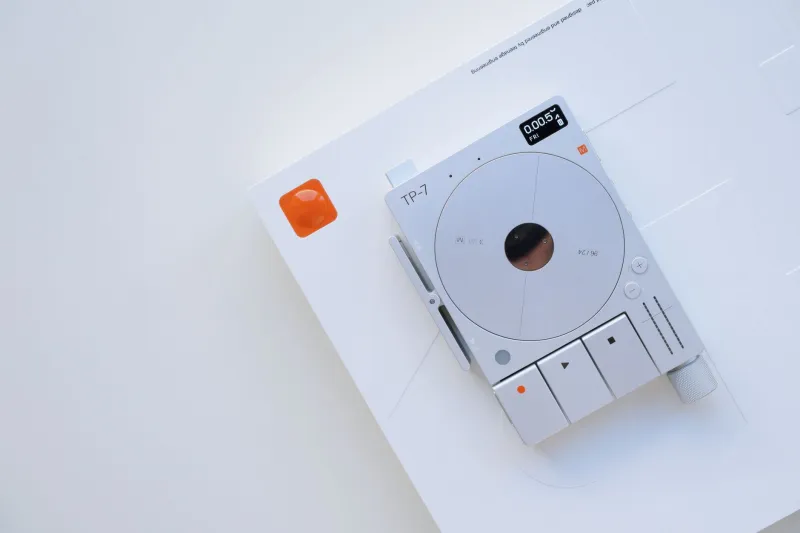
Paid to Leave It Blank: The Booming Market for Deliberately Incomplete Digital Work

There's a particular kind of digital product making serious waves right now — and it doesn't have all its pieces. Not because the designer ran out of time, or the budget got cut, or the client got cold feet. But because leaving things unfinished was the whole point.
Welcome to what some in the industry are quietly calling the negative space economy: a counterintuitive corner of the digital market where incompleteness isn't a flaw to apologize for — it's a premium feature to charge extra for.
The Product That Sells Itself by Selling Less
To understand how this works, it helps to look at where it started gaining traction. Around 2021 and 2022, a wave of NFT projects began leaning hard into visual restraint. Not the polished, hyper-rendered 3D sculptures that were dominating headlines, but sparse line drawings, single-element compositions, and collections that felt almost aggressively unfinished. They sold — fast, and for a lot.
Collectors weren't confused. They were drawn in. The incompleteness created a kind of psychological magnetism, pulling viewers into the work rather than presenting everything upfront. It demanded participation. And participation, it turns out, drives perceived value through the roof.
Digital product designer Mara Chen, who splits her time between San Francisco and remote work for clients across the US, describes the shift plainly: "There's a ceiling on how impressive 'complete' can look. Once something is fully rendered and polished, it's done. There's nowhere for the viewer to go. But when you leave deliberate gaps, people fill them in with their own imagination — and suddenly the product means something personal to them."
That personal meaning? Brands have figured out it's worth paying for.
Interfaces That Refuse to Hold Your Hand
The trend isn't limited to collectible art. It's showing up in product design, app UI, and even brand identity systems in ways that would have baffled a design director five years ago.
Several direct-to-consumer startups have launched with what UX designers are calling "intentional friction" interfaces — dashboards and onboarding flows that deliberately withhold information, leave visual fields sparse, and resist the urge to fill every pixel with guidance or decoration. The counterintuitive result: higher engagement metrics and stronger brand loyalty scores compared to their more fully-realized competitors.
The logic, according to tech entrepreneur and product strategist Jonah Reeves, who's worked with early-stage companies in New York and Austin, is rooted in cognitive psychology. "When an interface is too complete, users feel like they're consuming it. When it leaves room, they feel like they're exploring it. That exploration creates ownership. Ownership creates retention."
Reeves points to the enduring success of tools like Notion and early-era Figma, which launched with interfaces that felt almost deliberately bare. Users didn't see emptiness — they saw possibility. And they built their workflows, their identities, their whole professional routines around that open space.
What 'Unpolished' Actually Costs
Here's where the economics get genuinely strange: producing deliberately incomplete digital work is often more expensive than producing something fully finished.
The reason is precision. Getting something to feel effortlessly sparse — to look like a single brushstroke that somehow carries emotional weight, or a UI that feels calm rather than lazy — requires an enormous amount of skilled decision-making. Every element that isn't there had to be consciously removed. Every gap had to be measured. The restraint has to be confident, or it just looks like someone gave up.
"Clients think they're paying for less," says Chen. "They're actually paying for someone who knows exactly what to cut — and has the nerve to cut it."
That expertise is increasingly rare and increasingly expensive. Digital studios specializing in minimalist brand systems are charging rates comparable to full-service agencies, sometimes higher. And in the NFT space, artists working in restrained styles have commanded floor prices that outperform far more technically complex collections.
The rough math: a fully-illustrated, intricately detailed digital artwork might sell for what the market thinks it's worth based on visible labor. A single, sparse composition from the right artist — one that leaves the viewer doing interpretive work — can sell for multiples of that, because its value lives partly outside the object itself.
The Brand Angle: Selling Identity Through What You Don't Show
Maybe the most telling sign of this shift is how legacy brands are starting to adopt it. Major consumer companies that once competed on visual density — more features listed, more imagery packed in, more proof of value per square inch of marketing real estate — are quietly pivoting toward restraint.
Luxury has always understood this. A Bottega Veneta ad that's mostly negative space isn't an accident; it's a statement about who the brand thinks its customer is. But that logic is now filtering down into tech products, SaaS platforms, and even content creator economies.
Creators on platforms like YouTube and Substack are experimenting with what you might call editorial incompleteness — deliberately leaving arguments open-ended, publishing work that invites response rather than delivering conclusions. Engagement goes up. Comments get longer. The community leans in.
"The internet trained everyone to expect complete, packaged content," says Reeves. "So when something shows up that doesn't wrap itself up neatly, it actually stands out. It feels more honest. More human."
The Risk Nobody's Talking About
None of this is without tension. The negative space economy has a dark side that's worth naming: not everything sparse is intentional, and not everything unfinished is art.
As the market rewards incompleteness, there's growing concern that brands and creators will mistake genuine restraint for simple laziness — shipping half-built products and calling it a philosophy. Some corners of the NFT world already saw this play out, with low-effort collections cynically leaning on minimalist framing to justify weak execution.
The difference, according to the designers and collectors who are actually navigating this space, comes down to intention and craft. Genuine negative space work has a kind of gravity to it. You can feel the decisions behind the emptiness. The lazy version just feels absent.
"There's a version of this that's deeply honest and a version that's just a marketing angle," Chen says. "Audiences are getting better at telling the difference."
Where This Goes From Here
The negative space economy isn't a fringe aesthetic trend. It's a structural shift in how digital value gets assigned — one that rewards cognitive engagement over visual spectacle, and trusts audiences to meet the work halfway.
For brands, designers, and creators willing to do the hard work of strategic removal, the upside is real. For those hoping to coast on the trend without the craft behind it, the market is already developing a good eye.
Leaving things blank, it turns out, takes more skill than filling them in. And right now, the market is paying to prove it.