Frozen on Purpose: How Digital Creators Are Making Stillness Go Viral
The internet moves fast. Always has. Content is engineered to keep your thumb scrolling, your eyes darting, your brain chasing the next hit of novelty. So it's genuinely strange — and kind of beautiful — that one of the most talked-about creative trends right now involves doing the exact opposite of all that.
Call it pause art. Call it stillness culture. Whatever label you stick on it, the concept is the same: digital creators deliberately interrupting motion, freezing a frame, or holding a moment just long enough to make you feel something. And it's working. Not in a niche, underground way — in a millions-of-views, brand-deal, repost-frenzy kind of way.
What Pause Art Actually Looks Like
If you've spent any time on TikTok or Instagram Reels lately, you've probably encountered it without realizing it had a name. It might be a video that cuts to a single still frame at the exact moment of peak tension and just... stays there. No resolution. No punchline. Just the image, held, while ambient sound continues underneath.
Or it might be a looping animation that pauses mid-cycle — a figure mid-step, a wave half-broken, a door half-open — and refuses to complete the action. Viewers watch, wait, and then watch again, convinced they missed something. They didn't. That's the whole point.
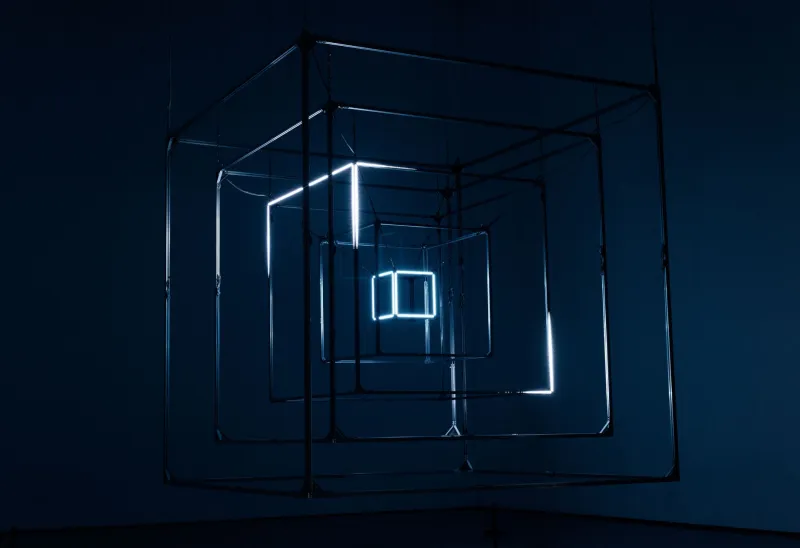
Some creators are taking it further into interactive territory. Digital installations shared as web experiences or app-based pieces ask users to literally hold down a button, stay on a page for a set amount of time, or resist clicking anything — rewarding patience with a slow visual reveal. The discomfort is intentional. The pause is the content.
Why Platforms Are Actually Rewarding This
Here's the part that surprises people: TikTok and Instagram's algorithms aren't punishing these creators for making slow, still content. In a lot of cases, they're amplifying it.
The reason comes down to watch time and repeat views. A video that freezes unexpectedly makes people rewatch it. They assume they missed a transition, a hidden detail, a punchline that never came. That rewatch behavior signals to the algorithm that the content is worth promoting. Creators who figured this out early — even accidentally — started building playbooks around it.
There's also the comment section effect. Pause art generates conversation in a way that fast, polished content often doesn't. People ask questions. They argue about what the frozen moment means. They tag friends. All of that engagement compounds, and the post keeps climbing.
The Gen Z Connection
It's not a coincidence that this trend has found its deepest roots with Gen Z creators and audiences. This is a generation that grew up with content overload as the baseline — not a novelty, not a complaint, just the ambient condition of daily life. The novelty, for them, is the interruption.
There's also something emotionally resonant about the frozen moment for a generation that's been vocal about burnout, anxiety, and the pressure to constantly produce and perform. A held frame that refuses to move forward can feel less like a creative gimmick and more like a visual exhale. Several creators who've spoken publicly about their work in this space have described it explicitly in those terms — making something that gives both themselves and their audience permission to just be somewhere for a second.
Art history has a word for this kind of tension: punctum, borrowed from photographer Roland Barthes, referring to the element in an image that arrests you, that stops time. Gen Z didn't invent the concept. They just found a way to engineer it natively for the digital feed.
The Artists Getting Noticed
Across platforms, a loose community of creators has emerged around this aesthetic — though most of them resist being grouped together, which is very on-brand for the whole vibe.
Some are animators who specialize in loops that feel incomplete. Others are photographers who post single images with no caption, no context, and no follow-up — just a moment, floating. A smaller subset works in interactive digital art, building browser-based experiences that respond to inaction rather than action. Sit still long enough, and the piece evolves. Click too soon, and you get nothing.
What they share is a commitment to deliberate pacing in a space that treats pacing as an afterthought. And increasingly, they're getting paid for it — through platform creator funds, brand partnerships with companies chasing the aesthetic's cultural cachet, and direct sales of digital works to collectors who want something that feels meaningfully different from the content firehose.
What It Reveals About Us
There's a version of this story that's purely about platform mechanics — smart creators gaming algorithms with a clever technique. That version is true, but it's not the whole picture.
The fact that stillness is the technique doing the gaming says something. We've built digital environments so saturated with motion and noise that the absence of both has become genuinely arresting. A frozen frame stands out because everything around it is moving. A pause lands hard because nothing else ever pauses.
In that sense, pause art isn't just a trend. It's a mirror. It shows us what our attention has been conditioned to expect — and what happens when something refuses to meet that expectation. The discomfort viewers feel when a video holds still, when the loop doesn't complete, when the experience asks them to wait — that discomfort is real information about how we've learned to consume.
Some creators are using that information to make something genuinely affecting. Others are using it to rack up views. Honestly, a lot of them are doing both, and it's hard to fault anyone for that.
The Minimalist Thread
What draws Opeal to this conversation is how cleanly pause art sits inside a broader minimalist current running through digital culture right now. Across design, music, and visual art, there's a growing appetite for work that does less — that trusts the viewer to bring something to the table, that leaves room for interpretation rather than spelling everything out.
The frozen frame is maybe the most literal version of that impulse. It gives you a moment and then steps back. What you do with it — what you feel, what you project onto it, how long you sit with it — that's yours. The creator sets the stage and then, deliberately, stops performing.
In a landscape where everyone is competing for your attention by doing more, that restraint is striking. And apparently, it's striking enough to go viral.
Which is its own kind of poetic contradiction. The pause, it turns out, is one of the loudest things you can do.