Move to See It: The Quiet Rise of Cursor-Made Art
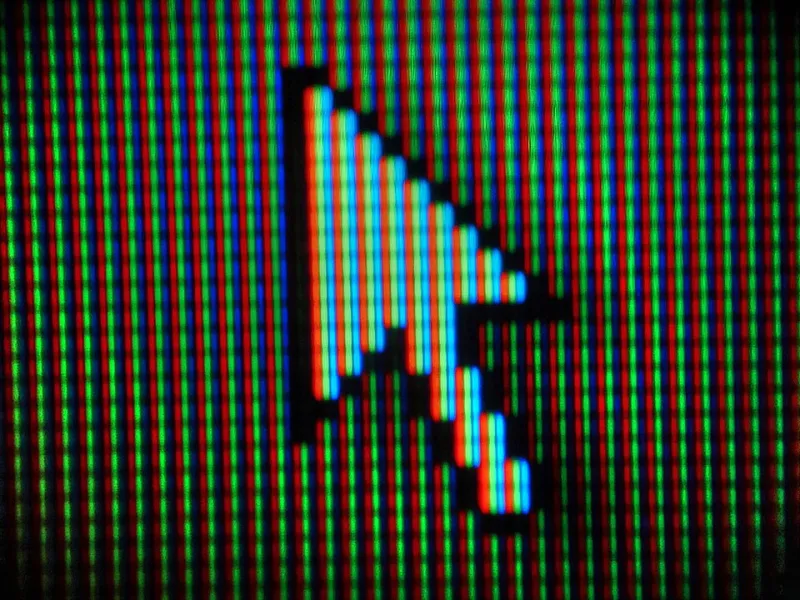
Photo: Nevit Dilmen, CC BY-SA 3.0, via Wikimedia Commons
Most art waits for you. You walk up, you look, you leave. Cursor art does not work that way. It waits for your hand. The piece is not finished until someone moves a mouse across it. That sounds like a gimmick until you actually try it. Then it feels like a conversation with very few words.
The Art Doesn't Start Until You Do
A cursor piece is built on a simple premise: the viewer is part of the composition. The artist writes rules for how the work responds to movement. A shape follows the pointer. A gradient shifts with speed. A line remembers where you have been. The result can be almost invisible at rest. Then you move, and the piece wakes up.
These works are usually small. A single dot. A soft edge. A slow trail that fades after a few seconds. The restraint is the point. A cursor piece cannot compete with a busy screen because the screen is already busy. It has to give the viewer one thing to do and then reward that thing.
Artists in the US have been experimenting with this for years, but 2026 is the first time the work has started to find a real collector base. Part of that is technical. Browsers are faster. Screens are sharper. Part of it is cultural. People are tired of looking. They want to do something, even if that something is just moving a mouse.
Recording the Unrecordable
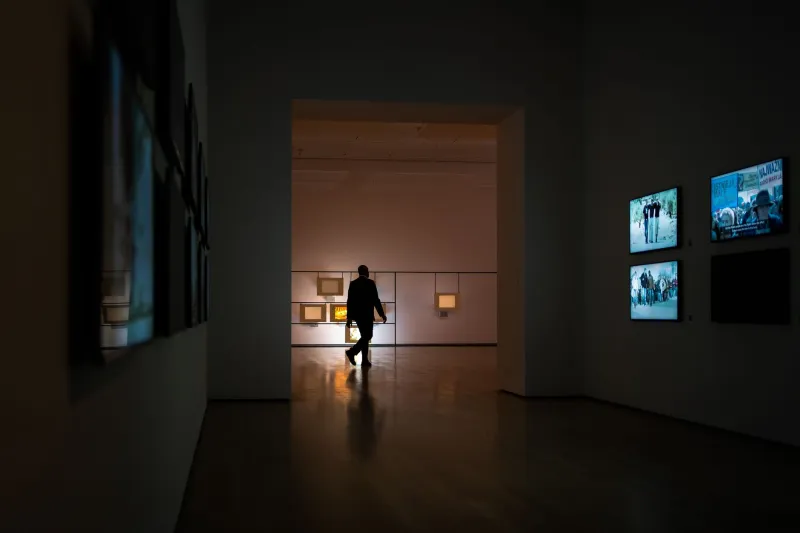
Showing cursor art is a problem. A still image misses the point. A video helps, but it turns a live interaction into a performance. Galleries have tried both. Some set up a screen with a trackpad and let visitors take turns. Others project a live feed of someone else's cursor, which turns the audience into spectators of a spectator.
The artists themselves have gotten good at documenting the work. They record screen captures with the cursor visible. They make short loops that show the piece in motion. They write instructions. The documentation becomes part of the piece, which is either a compromise or a new form, depending on who you ask.
For collectors, the question is what exactly is being sold. Sometimes it is the code. Sometimes it is a video edition. Sometimes it is a license to host the work on a personal site. The market is still figuring out the language. But the demand is there, especially among buyers who already collect digital art and want something that does not just sit in a folder.
What Collectors Actually Buy
You are not buying a picture. You are buying a set of rules. That is how one Los Angeles collector described it. The piece needs a viewer to move. Without that, it is potential energy. With it, it becomes a small event. The collector is buying the event.
That shift changes the relationship. A painting on a wall is passive. A cursor piece is active. You have to show up for it. You have to move. The reward is subtle: a shape that leans toward you, a color that deepens when you slow down, a line that disappears when you stop paying attention. It is minimalism as participation rather than decoration.
Prices vary widely. Some works are sold as open editions for a few hundred dollars. Others are commissioned for private sites or lobby installations. The higher-end pieces often come with a custom display setup, which makes them closer to an experience than an object. That is a harder sell in a market used to files and frames, but it is also a more memorable one.
The Screen as a Stage for Small Gestures
What makes cursor art interesting is how little it needs. No soundtrack. No animation loop. No elaborate interface. Just a pointer and a rule. The work is almost nothing until you touch it. That is a very Opeal idea: the frame is the screen, the brush is the mouse, and the subject is attention itself.
Some artists have started building pieces that respond to stillness. If you stop moving, the work changes. If you leave the window, it resets. These pieces are not just interactive. They are temperamental. They ask you to stay. In a culture that rewards leaving, that is a quiet provocation.
Participation Is the New Decoration
The broader shift is clear. Digital collectors are moving from objects to behaviors. They want work that does something, even if that something is small. A cursor piece does not fill a wall. It fills a moment. That is a different kind of value, and it is starting to hold.
In 2026, the cursor is one of the few honest signals left. It tells the artist where you looked, how fast you moved, and when you stopped. The best cursor art does not waste that signal. It turns it into a tiny, temporary thing that only exists because you showed up. That is minimalism with a pulse.