The Signal Ends Here: Why Some Digital Art Now Begins in Airplane Mode
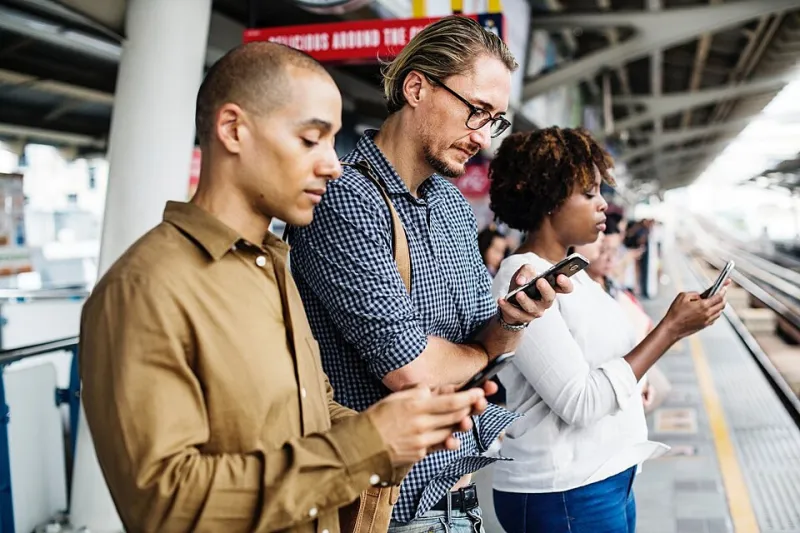
Photo: Rawpixel.com, CC0, via Wikimedia Commons
On a rainy Thursday in Brooklyn this fall, a line formed outside a storefront with no sign and no Wi-Fi password. Visitors were handed a printed card instead of a link: please switch your phone to airplane mode before entering. Only then did the screen on the wall wake up. The show was not streaming from a cloud folder or a gallery server. A small local file had been downloaded at the door, and the work appeared only after the connection died. In 2026, that instruction is starting to feel less like a stunt and more like a format.
A Door That Opens Only When the Bars Disappear
The Wi-Fi-off show is still a niche affair, but it is showing up in more American cities than you might expect. There are one-night drops in Los Angeles, appointment-only viewings in Austin, and small runs in Portland where the only way to see the piece is to load it before you walk in. Organizers describe the request as a boundary, not a gimmick. The work does not need the internet. It needs you to stop being on the internet.
The mechanics vary. Some shows ask for airplane mode. Others hand out tablets with the radio disabled. A few sell a local file that unlocks for a set number of minutes once the device is offline. The common thread is friction. You cannot scroll past a piece that has not loaded. You cannot bookmark it for later. You cannot screenshot it and send it to a group chat while the artist is still talking.
Scarcity You Can Feel
Digital art has spent years trying to solve abundance. Files duplicate. Images circulate. A good piece can be everywhere in an afternoon. The offline show adds a different kind of scarcity, not artificial rarity but temporary attention. For a few minutes, the work exists in one room, on one screen, for one person who agreed to be unreachable.
That is a strange bargain for an audience trained to multitask. It is also the point. The artists involved tend to talk less about exclusivity and more about a clean signal. When the phone stops vibrating, the piece gets a fair fight for your eyes. When the connection returns, the work does not follow you home. The visit becomes the edition.
The Screen Becomes a Private Room
There is a practical shift that happens in airplane mode. The screen stops behaving like a feed and starts behaving like a window. Visitors at a recent Los Angeles viewing described the sensation as unusually quiet, even though the room was full. One person said it felt like someone had turned off the museum's overhead lights. Another said the piece seemed longer, even though the runtime had not changed.
That is not magic. It is context. A screen with notifications is a shared surface. A screen with no signal is a private one. The offline gallery leans into that difference. It does not ask you to leave your phone at home. It asks you to keep the phone and remove the part of it that keeps pulling you elsewhere.
Friction Is the Point
Not everyone loves the rule. Some visitors feel controlled. Others wonder why they need a gallery to tell them how to look. The defensiveness is telling. We are used to art that accommodates interruption. Offline work refuses to be polite about it. It treats attention as part of the medium.
For collectors, the format also creates a useful test. If a piece can hold you when nothing else can reach you, maybe it belongs in your life. If it only works as a thumbnail between two other thumbnails, maybe it does not. That is a blunt way to filter taste, but it is not a bad one.
What Comes After the Bars Return
The model has limits. It does not scale like a viral post. It requires trust, a little technical care, and an audience willing to follow instructions. But small scale may be the feature. In 2026, the most crowded part of digital culture is the part that never stops. The offline gallery offers a rare thing: an ending.
When the phone comes back on, the work stays behind. The room stays behind. What remains is the memory of looking without being pulled away. For a certain kind of artist, that is worth more than another open tab.