The Empty Syllabus: Why Creators Are Charging More to Teach You Less
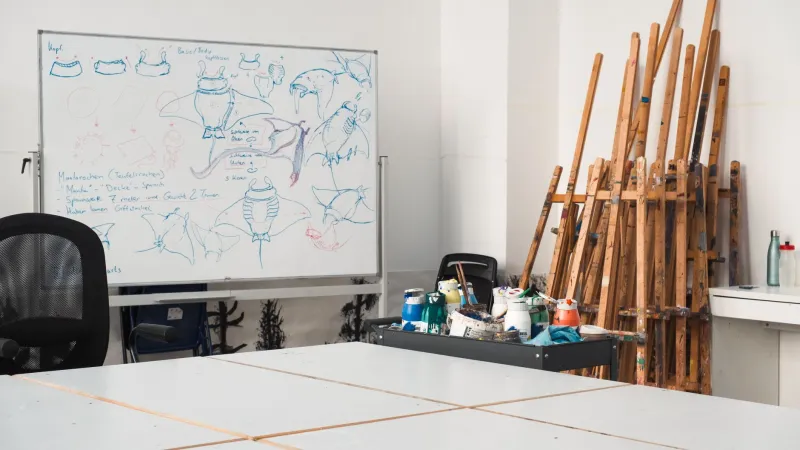
The workshop cost $400. It lasted ninety minutes. The instructor showed one slide — a single sentence: 'Make less.' Then she sat down and said nothing for a full minute. People paid. Some of them are still paying.
This is not a parody. Across the American digital art scene, a small but influential group of minimalist creators is selling workshops, courses, and mentorship programs that deliberately teach almost nothing. No step-by-step tutorials. No templates. No list of shortcuts. Just a constraint, a conversation, and a lot of space. The format is being called many things, but the most accurate might be the empty syllabus.
The product is a boundary
On paper, it sounds like a scam. In practice, it is more complicated. The artists running these programs are not hiding techniques. They are refusing to provide them. What they sell instead is a boundary: a rule, a deadline, a container.
One New York artist offers a month-long course with a single instruction: use one color. That is it. Students check in weekly, share what they made, and get feedback. The artist does not teach color theory. She does not show her process. She asks questions and enforces the constraint. The course sells out.
Another creator sells a workshop called 'Delete Half.' Participants bring a current project and remove half of it. The instructor does not tell them which half. The point is not the deletion. The point is the decision. Students pay for the pressure to decide.
Less instruction, more transference
There is a real pedagogical idea underneath this. Art school has always relied on the critique model, where a teacher says less and asks more. But the empty syllabus strips even that down. The instructor is not a guide. They are a presence.
That presence is what students are buying. In a market flooded with tutorials, courses, and YouTube explainers, access to a working artist's attention is scarce. A three-hour workshop with a respected minimalist is not valuable because of the information it contains. It is valuable because of the information it withholds. The artist's taste becomes the product.
This is where the trend gets tricky. Taste is hard to teach and easy to fake. Some empty-syllabus workshops are genuinely useful: they give students permission to stop overproducing and start editing. Others are just vibes with a Stripe link. The difference is usually whether the instructor provides structure or just silence. A constraint is structure. A blank page is not.
The economics of saying nothing
The business model is smart. Small cohorts. High prices. No recordings. No lifetime access. The scarcity is built in. If you teach everything, there is no reason to come back. If you teach almost nothing, the relationship continues.
That is not necessarily cynical. Minimalist artists have to protect their time and their brand. But it does raise questions about what students are actually paying for. In the US, the self-help and online-course economy is enormous. People pay for accountability, community, and the feeling of moving forward. The empty syllabus fits neatly into that economy because it sells less content and more container.
There is also a gatekeeping risk. When instruction becomes deliberately vague, the students who benefit most are the ones who already have a foundation. Beginners who need concrete skills can leave feeling inspired but unequipped. The artists I spoke with acknowledged this. Some offer free one-page PDFs with practical basics. Others say their work is not for beginners, and they are upfront about it. The ones who are not upfront are the problem.
What students actually buy
I talked to a designer in Portland who paid $600 for a six-week empty-syllabus mentorship. She described it as 'the most expensive permission slip of my life.' She did not learn a new tool. She did not get a portfolio review. What she got was a weekly deadline and a rule: make one thing, then stop. By the end, she had a body of work she actually liked.
Another student was less impressed. He paid $250 for a workshop that promised to 'unlock restraint' and got a two-hour Zoom call with no agenda. He said it felt like paying for a mood. Both experiences are possible because the product is not standardized. It is a relationship.
That is the uncomfortable truth at the center of this trend. The empty syllabus works when the artist is generous with attention and clear about the container. It fails when the artist mistakes silence for substance. Students are not paying for nothing. They are paying for a specific kind of nothing: the kind that makes room for their own work.
The quiet curriculum
Is this good for digital culture? I am not sure it is good or bad. It is consistent. Minimalist art has spent the last decade arguing that less is more. It makes sense that the teaching would follow. The risk is that 'less' becomes an excuse for 'nothing,' and that students who need real skills get sold a philosophy instead.
The best versions of this trend are honest about what they are. They do not promise transformation. They promise a constraint, a deadline, and a room. That is not nothing. In a creative economy that rewards endless production, a workshop that teaches you to stop can be worth more than another tutorial. You just have to know what you are buying.