Quiet on Purpose: How Gen Z Is Stripping Their Online Lives Down to Almost Nothing
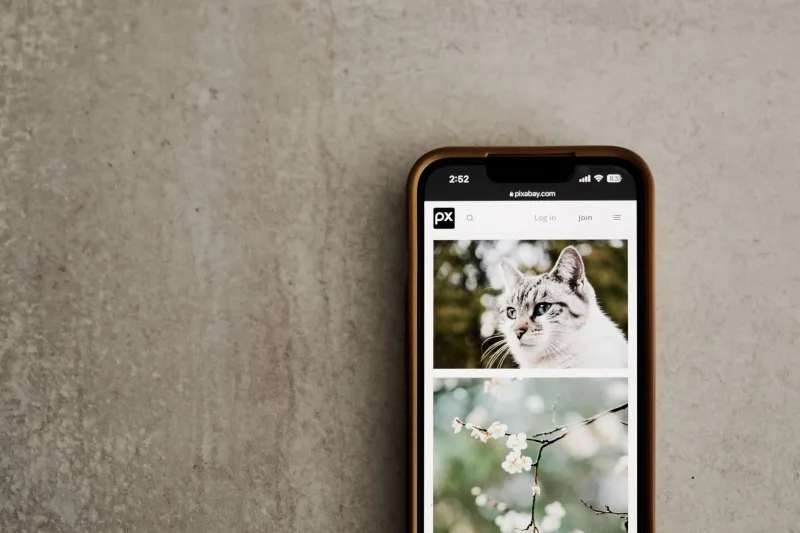
Scroll through the feed of someone like Maya Chen, a 22-year-old digital illustrator based in Portland, and you might think her account is abandoned. Three posts. A single-color bio. No pinned reels, no story highlights, no link-in-bio carousel selling you seventeen things at once. But Maya has 40,000 followers — and she posts maybe once a month.
"People always ask if I'm okay," she laughs. "Like, silence must mean something's wrong. But for me, it means everything's right."
Maya is part of a quietly growing movement among Gen Z creators who are deliberately pulling back from the relentless content churn that defines most social platforms. Where older millennials built personal brands on volume — daily uploads, constant Stories, algorithmic consistency — a younger cohort is doing the opposite. And somehow, it's working.
The Backlash Nobody Announced
There was no manifesto. No viral moment where someone declared maximalism dead. It happened gradually, the way most real cultural shifts do — through individual choices that, when you zoom out, start to look like a pattern.
Dr. Priya Okonkwo, a digital sociology researcher at NYU, has been tracking this shift for the past two years. "What we're seeing is a generation that grew up inside the algorithm," she explains. "They understand it intuitively. And some of them have decided the best response to a system that rewards noise is radical quiet."
The aesthetic markers are consistent: sparse grids, long gaps between posts, monochromatic or near-colorless visual identities, minimal captions — sometimes just a single word or nothing at all. Profiles that feel more like mood boards than media channels.
For many of these creators, the restraint is explicitly political. "Every platform is designed to make you post more, engage more, stay longer," says Jordan Alvarez, a 24-year-old motion designer in Chicago. "When I refuse to do that, I'm opting out of a system that's built to extract from me. That feels like power."
Authenticity Through Absence
There's a paradox at the center of this trend that's worth sitting with: in a space where visibility is currency, choosing invisibility reads as confidence. The logic, once you hear it, makes a strange kind of sense.
When every creator is shouting, the one who says nothing commands attention differently. Scarcity creates intrigue. A profile that offers less invites you to project more onto it — to fill in the gaps with your own imagination. It's the digital equivalent of a painting where the negative space does more work than the subject.
This tracks with broader research on consumer behavior. Studies from the Journal of Consumer Psychology have shown that consumers often perceive restraint as a signal of quality — a brand or person that doesn't need to try hard must have something genuinely worth waiting for.
For Gen Z, who have grown up watching influencers burn out in real time, the sparse aesthetic also carries a wellness dimension. "I watched people I followed completely fall apart trying to keep up," says Simone Watkins, a 21-year-old photographer from Atlanta. "I decided early on that I wasn't going to let a platform dictate my creative rhythm. If I have something to say, I'll say it. If I don't, I won't."
The Algorithm Doesn't Like It (And That's Kind of the Point)
Here's the thing most platform guides will tell you: consistency is king. Post regularly, engage daily, feed the machine. The algorithm rewards frequency. So what happens when you starve it?
For some creators, the answer is surprising. Without the noise of constant posting, the content they do share tends to hit harder. Engagement rates per post often climb. Audiences, conditioned to expect nothing, pay closer attention when something finally appears.
Dr. Okonkwo points to what she calls "anticipation economics." "When a creator posts rarely, each post becomes an event. It's the difference between a streaming service dropping one episode a week versus dumping an entire season at once. Scarcity shapes how we value things."
Not everyone who tries this finds success, of course. The strategy works best when there's genuine craft behind the restraint — when the sparse presence is backed by work that earns the silence around it. The minimalist aesthetic isn't a shortcut. If anything, it demands more of the content that does appear.
More Than an Aesthetic
It would be easy to dismiss this as just another trend — a visual style that'll cycle out when the next thing comes along. But the creators behind it tend to describe something deeper than aesthetics.
"I think a lot of us are trying to figure out what it means to make things in a world where everything gets made into content," says Jordan. "Like, can you just make something beautiful and let it exist without turning it into a strategy?"
That question — whether art can survive the content economy intact — is one that digital culture has been circling for years. What's interesting about this particular moment is that a generation raised entirely inside that economy is the one asking it most loudly. Or, more accurately, most quietly.
Maya puts it simply: "I'd rather have ten people who actually care about what I make than ten thousand who just scrolled past it. The blank space on my profile isn't emptiness. It's room to breathe."
In a feed that never stops moving, that kind of stillness is starting to feel radical.