The Grid Is the Point: How Spreadsheets Became a Serious Digital Canvas

Photo: Marc Ryckaert (MJJR), CC BY-SA 3.0 nl, via Wikimedia Commons
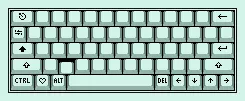
Open a new spreadsheet. You get a grid, a formula bar, and a blinking cursor. It is not a place where most people expect to find art. But in 2026, a growing number of digital artists are treating Excel, Google Sheets, and other office software as legitimate canvases — and the results are stranger and more beautiful than the tools have any right to be.
The appeal is not just the irony, though the irony is real. It is the constraint. A spreadsheet gives you cells, rows, columns, and a limited set of formatting options. There are no brushes, no layers, no blend modes. You cannot hide behind a texture pack. Every decision is visible, and every mistake is a cell you have to live with.
Why the office tool works
Minimalist digital art has always been about doing more with less. Spreadsheets take that to an extreme. The grid is already there. The artist's job is to decide what belongs in each cell and what stays empty.
One Austin-based artist I spoke with builds slow-moving color gradients by filling cells with conditional formatting rules. The piece updates when the sheet recalculates. Another uses formulas to generate simple patterns that shift depending on the date. Neither artist is trying to make a spreadsheet look like a painting. They are letting the spreadsheet be a spreadsheet.
That distinction is important. A lot of early spreadsheet art was essentially pixel art with extra steps: fill cells with color, squint, call it a portrait. The new work is more interested in the system itself. The formulas are part of the piece. The recalculation is part of the piece. The fact that it runs in a tool built for budgets is part of the piece.
The irony is not the whole joke
It would be easy to write this off as a stunt. Office software art has been a novelty for years. But the artists getting attention now are not winking at the camera. They are using the language of work to make something that does not feel like work at all.
There is a quiet critique buried in that. Spreadsheets are where a lot of Americans spend their days. They are tools of measurement, forecasting, and control. Turning one into a slow, useless, beautiful thing is a small act of resistance. It says the grid can hold something other than targets.
Collectors seem to be responding to that. Spreadsheet-born pieces are still a niche market, but prices are moving. Some artists sell the live file with a view-only link and a certificate of authenticity. Others edition the work as a screen recording, though purists argue that misses the point. The file is the piece. The screen recording is documentation.
Collecting a workbook
How do you collect a spreadsheet? Carefully.
Authenticity usually comes down to the file itself: a hash, a version history, and a signed agreement about what the collector can and cannot do with it. Some artists embed a hidden sheet with provenance information. Others use cell comments as a kind of digital signature. None of this is standardized, which is part of the problem and part of the charm.
A gallery director in Los Angeles told me that showing spreadsheet art is mostly about resisting the urge to explain it. 'You put it on a monitor, you let the cursor blink, and you let people figure out that it is alive,' she said. 'The label says Google Sheets, 2026. That is enough.'
The preservation question is real. Software changes. Formulas break. A piece that depends on a specific version of Excel may not survive the next update. Some artists treat that fragility as part of the work. Others archive screenshots and recordings as a backup. The market has not settled on a standard, which means collectors are buying a little bit of uncertainty along with the file.
The constraint dividend
What makes spreadsheet art more than a novelty is what it forces the artist to give up. No gradients that hide seams. No typography tricks that distract from structure. No endless undos. You work in cells, and cells do not care about your intentions.
That constraint has a way of clarifying a piece. The best spreadsheet art I have seen looks inevitable, as if it could not have been made any other way. It is minimal not because the artist stripped things away, but because the tool never offered them in the first place.
For American audiences, there is an extra layer of familiarity. Almost everyone has opened a spreadsheet. Almost everyone has felt the specific boredom of a blank cell. Seeing that same grid turned into something worth looking at is a small shock. It rewires the way you see the tool, and maybe the way you see the workday.
The grid is the point
Spreadsheet art is not going to replace Photoshop, and it is not trying to. It is a reminder that a canvas is just a surface with rules. Change the rules and you change what art can look like. The artists doing this well are not using spreadsheets despite the constraints. They are using them because of them.
Next time you open a budget or a project tracker, look at the grid for a second. Someone out there is seeing a gallery wall. In 2026, that is not a joke. It is a medium.