Break It to Make It: Why Digital Creators Are Turning Interruption Into an Art Form
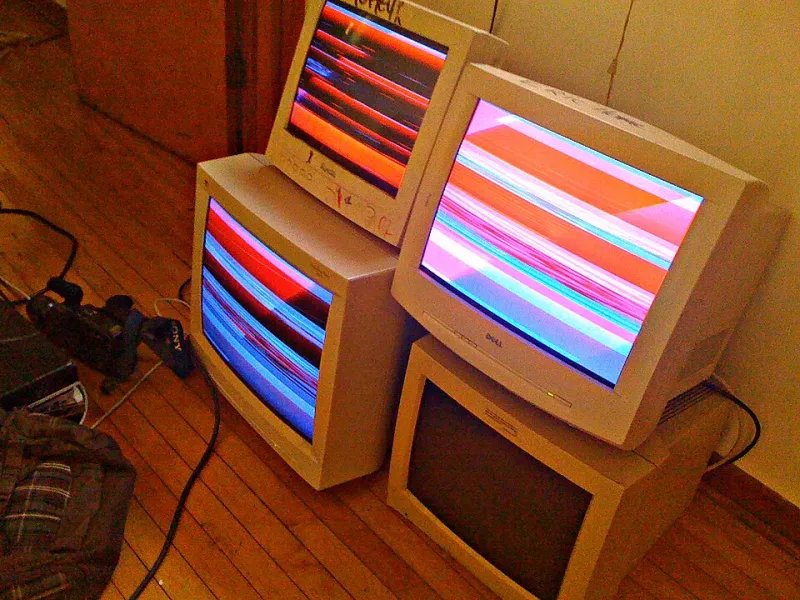
Photo: jonCates, CC BY-SA 4.0, via Wikimedia Commons
There's a moment in some of the best digital art you'll come across online where something just... stops. Not because of a bad internet connection or a buggy browser tab. It stops on purpose. And weirdly, that's exactly when you lean in.
This is the pause button aesthetic—and it's quietly becoming one of the most influential design philosophies in digital creativity right now.
The Glitch That Was Always Intentional
For years, glitches in digital media were things to apologize for. A corrupted video file, a stuttering animation, a frame that froze mid-transition—these were accidents, embarrassments. But somewhere along the way, a generation of digital creators started asking a different question: what if the interruption was the point?
Today, intentional glitch art is a full-blown movement. Artists are engineering visual stutter, deliberately corrupting image data, and building animations that pause at the exact moment they feel most uncomfortable. The effect isn't chaos—it's control. Highly calibrated, psychologically precise control.
Creators working in this space often describe their process as less about making something beautiful and more about making something felt. When a video cuts to black for two seconds in the middle of a sentence, your brain doesn't just notice—it fires up. It wants resolution. It wants to know what comes next. That cognitive tension is the art.
Why Your Brain Can't Ignore a Break
There's real psychology behind why interruption works so well as a design principle. The Zeigarnik Effect—a well-documented psychological phenomenon—suggests that people remember incomplete tasks and interrupted experiences far more vividly than completed ones. Your mind keeps the loop open, keeps returning to the thing that didn't resolve neatly.
Digital creators who've tapped into this, even intuitively, are producing work that sticks around in the viewer's head long after the scroll moves on. In a content landscape where the average American is exposed to somewhere between 4,000 and 10,000 brand or media impressions per day, being memorable isn't optional—it's survival.
The pause, the break, the deliberate discontinuity—these aren't flaws. They're retention strategies dressed up as aesthetic choices.
Blackouts, Blank Frames, and the Space Between
Beyond glitch aesthetics, a subtler form of interruption is gaining traction: the strategic blackout. Animators and motion designers are inserting pure black frames into otherwise fluid sequences. Video essayists are letting silence run for three, four, five seconds before cutting to the next thought. Loop artists are engineering brief moments where their usually seamless cycles suddenly... hesitate.
These micro-interruptions are doing something fascinating to audience behavior. On platforms like Instagram and TikTok, watch-time metrics tend to spike around moments of unexpected pause. Viewers who were half-watching suddenly snap to attention. Some replay the content just to confirm what they saw—or didn't see.
For creators posting on platforms where replays and extended watch-time directly influence algorithmic distribution, that's not just artistically interesting. It's strategically valuable.
Building an Identity Around the Break
What's particularly compelling about this trend is how effectively it functions as a brand signature. When a creator consistently uses interruption as their visual language—whether that's a specific glitch texture, a recurring blackout moment, or an animation that always pauses in the same unsettling way—audiences start to associate that discomfort with them specifically.
In minimalist digital art, where the tools of distinction are already stripped down, the how of interruption becomes the fingerprint. Two artists can both work in sparse, monochromatic styles, but the one who breaks the frame in a way that feels uniquely theirs is the one who builds a following.
This is the deeper logic of the pause button aesthetic: it's not just about the break itself, but about owning the break. Making it yours.
The Risk of Interruption Done Wrong
It's worth being honest about the line between effective disruption and just confusing your audience. Interruption only works as a creative tool when the surrounding work is strong enough to make the pause meaningful. A glitch in an otherwise forgettable piece doesn't create psychological tension—it just creates confusion.
Creators who've tried to adopt the aesthetic without the underlying craft often find that their audience interprets the interruption as exactly what it used to be: a mistake. The difference between a glitch that reads as intentional and one that reads as incompetent is almost entirely about context, execution, and the confidence with which it's presented.
That's what makes this trend genuinely difficult to pull off well. It looks effortless from the outside—just break something, right?—but the craft required to make an interruption feel deliberate rather than accidental is substantial.
What Comes After the Pause
The most interesting thing about the pause button aesthetic isn't the pause itself. It's what the creator chooses to do after it.
Some let the silence stretch until it becomes uncomfortable, then release into something unexpectedly warm. Others use the break to reframe everything that came before it—the interruption functions almost like a plot twist, making you reinterpret the earlier work. A few leave the break as the final statement, ending on the discontinuity itself and trusting the audience to sit with the open loop.
Each approach says something different about what the creator values and what they believe their audience can hold. And in a digital landscape that often rewards the loudest, fastest, most saturated content, there's something quietly radical about a creator who trusts a break to do the heavy lifting.
The pause, it turns out, can be the loudest thing in the room.